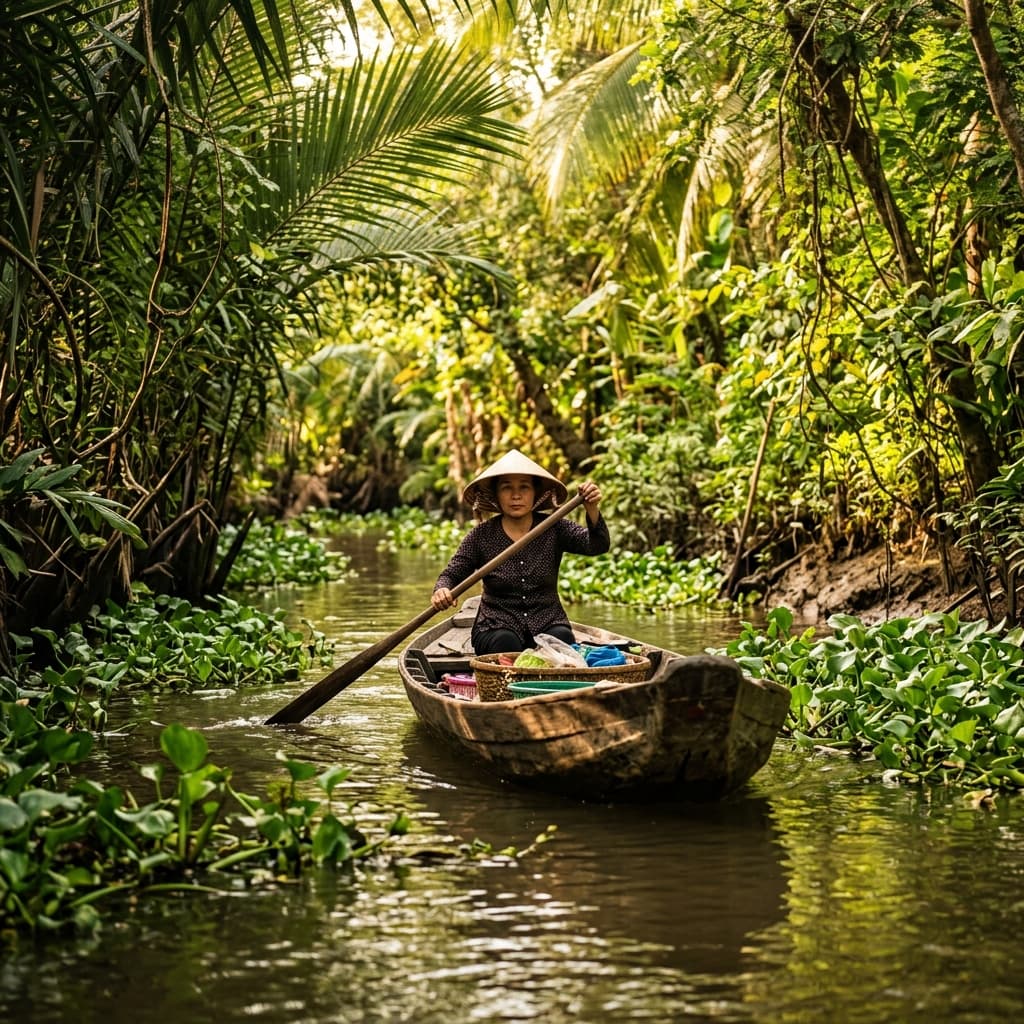
Of all the cooking classes I have taken in Vietnam — and I have taken several, from a Hanoi market tour with bánh cuon steaming to a Hoi An garden restaurant making cao lau with local noodle-masters — the one in Hue is the one that changed how I understood the country. Hue was the imperial capital of Vietnam from 1802 to 1945 and its cuisine was developed specifically for the Nguyen emperors, who are recorded as requiring fifty dishes per meal, presented in lacquered boxes on separate tables. The cooking that resulted is the most intricate, the most beautiful in its presentation, and the most culturally specific food tradition in Vietnam. Learning to make it in a centuries-old kitchen in the Citadel quarter is an afternoon that deserves more than a paragraph.
What Makes This Experience Special
- ✦Learn to prepare bánh khoái (Hue-style sizzling crepes) with local ingredients sourced from Dong Ba market
- ✦Master the technique for bún bò Huế — Hue's famous spicy beef noodle soup, more complex than Hanoi's pho
- ✦Prepare bánh nậm and bánh lọc — the rice-flour dumplings wrapped in banana leaves unique to Hue's imperial kitchen
- ✦Visit Dong Ba Market with your instructor to understand the ingredients before cooking
- ✦Cook in a restored traditional kitchen in the Citadel district
- ✦Sit down to eat everything you've made for lunch, with local wine
The Market First: Why Hue's Cooking Begins at Dong Ba
Every serious Hue cooking class starts at Dong Ba Market, the covered market beside the Perfume River that has been the city's main food market since 1899. The pre-cooking market visit is not a formality — in Hue specifically, it matters. The city's imperial cuisine depends on ingredients that are specific to this region: the shrimp paste (mắm ruốc) has a fermentation profile particular to the Tam Giang lagoon, the lemongrass is grown differently from the southern variety, and the banana leaf varieties that wrap the dumplings are selected with a precision that locals consider non-negotiable.
My instructor, Mrs Lan, was 68 years old and had been teaching this class for fourteen years. She moved through Dong Ba with the authority of someone who knows every vendor personally — which she does. She rejected three batches of rice flour before accepting the fourth, rubbed a piece of banana leaf between her thumb and forefinger and discarded it, and negotiated the price of a bunch of lemongrass down to what she considered its appropriate cost, all while explaining in Vietnamese (translated by my guide) the history of the dish we were going to make.
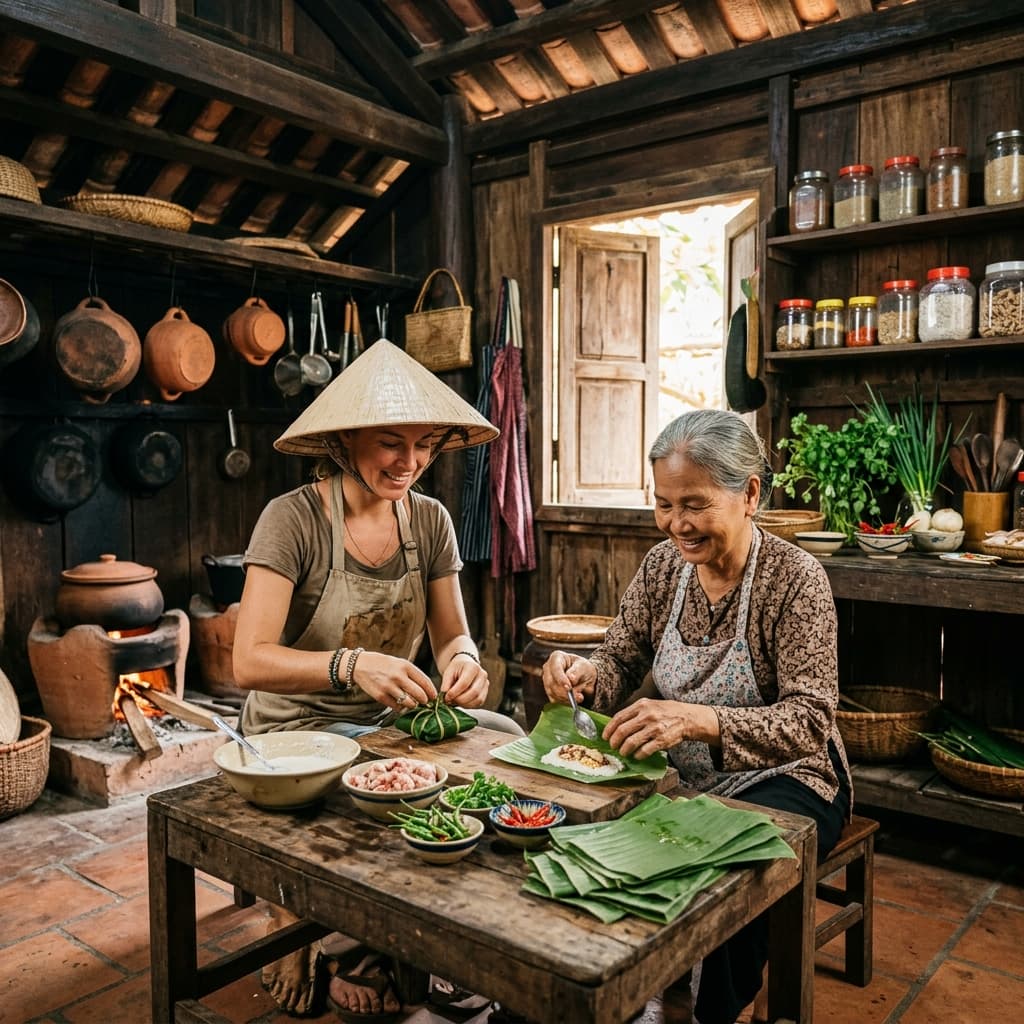
The kitchen, the grandmother, and the banana leaves. Mrs Lan has been teaching imperial Hue recipes for fourteen years.
The Dish That Will Follow You Home: Bánh Khoái
Bánh khoái is Hue's answer to the southern bánh xèo — a sizzling rice-flour crepe filled with shrimp, pork, and bean sprouts — but smaller, richer, and cooked in a clay pan that gives the bottom a specific char unavailable from any other surface. The word "khoái" means "delight" in Vietnamese, and the dish's name is recorded in Hue court documents from the 18th century. It was designed for the emperor's snacking pleasure.
Making it requires confidence with very high heat and a precise moment to fold — too early and the filling isn't cooked, too late and the crepe cracks. The first one you make will probably crack. Mrs Lan will not pretend otherwise. The third will be presentable. The fifth, which you eat with a dipping sauce made from fermented anchovy paste blended with lime and chilies, will be the best thing you eat in Hue. Not because of skill, but because you made it.
Why Hue Cooking Is Different from Hanoi or Saigon
Vietnamese cooking is often discussed as three regional traditions (northern, central, southern), but the central tradition in Hue has a specificity that makes it a separate category. Hue dishes are smaller — designed for presentation in many small portions rather than one large dish. They are more intensely flavoured — the fermented shrimp paste and shrimp sauce used here would be considered aggressive in Hanoi. And they are strikingly beautiful — the wrapping, folding, and presentation of Hue dishes reflects six centuries of court aesthetic training that has never quite faded from the city's culinary DNA.
Food writers who know Vietnam well describe Hue as "the city where Vietnamese food became art." The chef Marguerite Phân, who grew up in Hue and now consults for Michelin-starred restaurants in Paris, has said that she still cannot make bánh lọc to her grandmother's standard despite twenty years of professional cooking. "The technique is in the wrist," she told me through my guide, when I happened to mention her in conversation with Mrs Lan. Mrs Lan nodded firmly and said something I did not need translated.