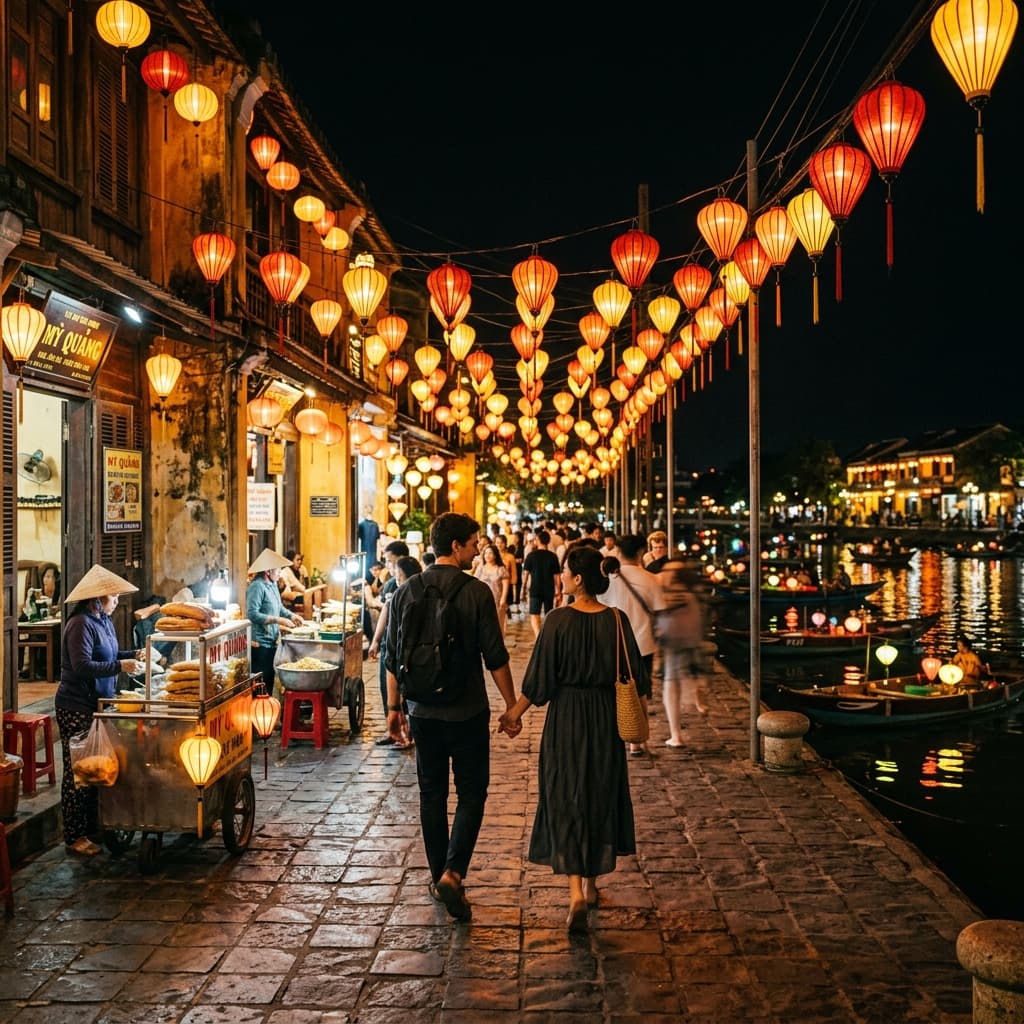
The first thing that stops you is the scale. Standing at the edge of the Muong Hoa Valley in Sapa, the terraced rice fields descend 500 vertical metres in an unbroken cascade of emerald steps — each one carved by hand from the Hoang Lien Son mountain range over a period of several hundred years by the Hmong, Dao, Tay, and Giay people who have lived here since the 13th century. UNESCO's preliminary listing notes describe the Hoang Lien Son terraced rice paddies as "one of the most outstanding examples of man-made landscape in the world." I have been to the rice terraces of Bali, the Longji fields in Guilin, and the UNESCO terraces of the Philippines. Sapa is different in a way that is hard to articulate precisely — something about the scale, the mist that fills the valleys, and the fact that you are walking through a living agricultural system, not a tourist attraction.
What Makes This Experience Special
- ✦Trek through the Muong Hoa Valley — Sapa's most dramatic landscape of terraced rice fields
- ✦Walk with a Black Hmong guide through Cat Cat, Ta Van, and Y Linh Ho villages
- ✦Visit Ta Phin village, home of the Red Dao community and their extraordinary medicinal herbs
- ✦Trek the trail from Sapa town down to Ban Ho — 22km through four distinct ethnic minority villages
- ✦Watch the sunrise over Fansipan (3,147m), the highest peak in Indochina, from Sapa ridge
- ✦September–October harvest season turns the terraces from green to deep gold
The Muong Hoa Valley: The Route Everyone Should Do
The standard Sapa trek goes from the town downhill into the Muong Hoa Valley, passes through Cat Cat village, and continues to Ta Van — a total of around 12km with 600 metres of descent. What makes this route exceptional is not its difficulty (it's moderate, suitable for anyone who walks regularly) but its variety: you cross rice terraces, bamboo forest, a suspension bridge over a mountain stream, and arrive in a Black Hmong village where your guide's family may well be waiting with green tea and bánh chưng.
The Hmong people have lived in the Sapa region since the 13th century and are the most numerous ethnic group in the valley. Their indigo-dyed clothing — hand-stitched with silver thread and beeswax batik patterns — is made entirely from hemp grown and processed by hand. Every woman you pass on the trail is wearing several years of their own labour. The designs are not decorative in the tourist-art sense; they are identity markers that denote village, clan, and marital status to anyone who knows how to read them.
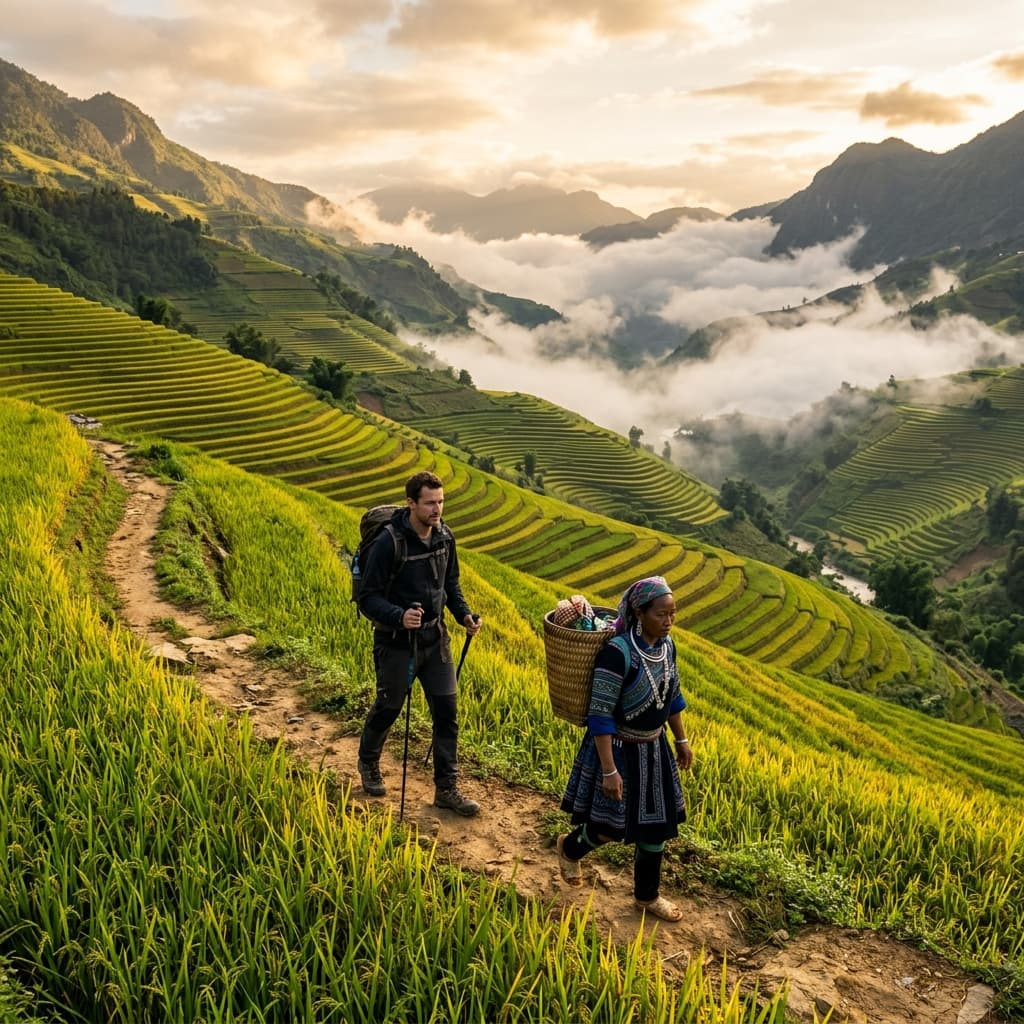
The Muong Hoa Valley trek. The woman leading the way has been guiding these paths since she was twelve years old.
The Harvest Season: September and October are Extraordinary
Every time of year in Sapa has its character, but the rice harvest — September through mid-October — is when the landscape reaches its peak. The terraces shift from deep green to gold over a period of about three weeks, the transition moving uphill as the lower fields ripen first. Walking through a valley where one terrace is still deep green, the next is golden, and the one above is already being harvested by women in indigo clothes up to their knees in paddy water is one of the most beautiful sights in Vietnam.
The British travel writer Colin Thubron visited Sapa in 1995 and wrote of the terraces that "they appeared to be the work of a civilisation that had mastered both artistry and agriculture to an equivalent degree." The Hoang Lien Son terraced fields are currently on Vietnam's nomination list for UNESCO World Heritage Cultural Landscape status — a recognition their creators have deserved for centuries.
Ta Phin Village: The Trek Most Visitors Miss
Forty minutes north of Sapa town by car, then a 45-minute walk through pine forest, Ta Phin is a Red Dao village of roughly 300 families. The Red Dao — distinguished by their red headdresses and the intricate embroidery that covers every surface of their clothing — are known for their extensive knowledge of medicinal plants. The village women offer traditional herbal baths using plants gathered from the surrounding forests, a practice documented by ethnobotanists as genuinely therapeutic. The water turns dark with the compounds of dried bark, leaves, and roots; the warmth is immediate and the scent is extraordinary.
Ta Phin receives a fraction of Cat Cat's visitors because the access is less straightforward. Which means when you arrive, the woman heating the bath in the back room of her house has time to sit with you and tell you — through your guide's translation — about her grandmother's grandmother's formula, written on a piece of wood kept in a clay pot in the corner.