I came to Vietnam for the landscapes and stayed for the food. After three visits spanning nearly a decade, I now plan every itinerary around eating: where the best bowl of pho is, which market in which city to visit at 6am, which restaurant has been run by the same grandmother for 40 years and still refuses to put a sign outside. Vietnam's food culture is not background — it is the entire foreground.
Chapter One: Hanoi — Restraint and Perfection
Northern Vietnamese cuisine is the most disciplined of the three regional styles. Fewer ingredients, cleaner flavours, a refusal to over-season. The pho at Pho Thin on Dinh Tien Hoang is a masterclass: the broth has been cooking since 4am, the tendon is barely set, and the crispy shallots are added at the last second. Do not put chilli or hoisin in it. Order it as it comes. Bun cha — grilled pork patties in a light fish sauce broth with cold rice noodles and herbs — is the other essential Hanoi dish. Go to Bun Cha Huong Lien (also known, rather grandly, as "Obama's Bun Cha" after a 2016 visit).
Chapter Two: Hue — The Cuisine of Emperors
Hue was Vietnam's imperial capital for 140 years, and its cuisine reflects this: more complex, more ceremonial, more vegetable-forward than either north or south. Bun bo Hue is the city's signature noodle soup — beefier and spicier than pho, with lemongrass as the dominant note and cubes of congealed pork blood for authenticity. Banh khoai (crispy rice pancakes) and nem lui (lemongrass pork skewers) are best eaten standing at a street stall on Nguyen Dinh Chieu. For the full imperial treatment, Madame Tuyen's hosts elaborate multi-course dinners in her family's beautifully preserved garden home.
Chapter Three: Hoi An — The Culinary Anomaly
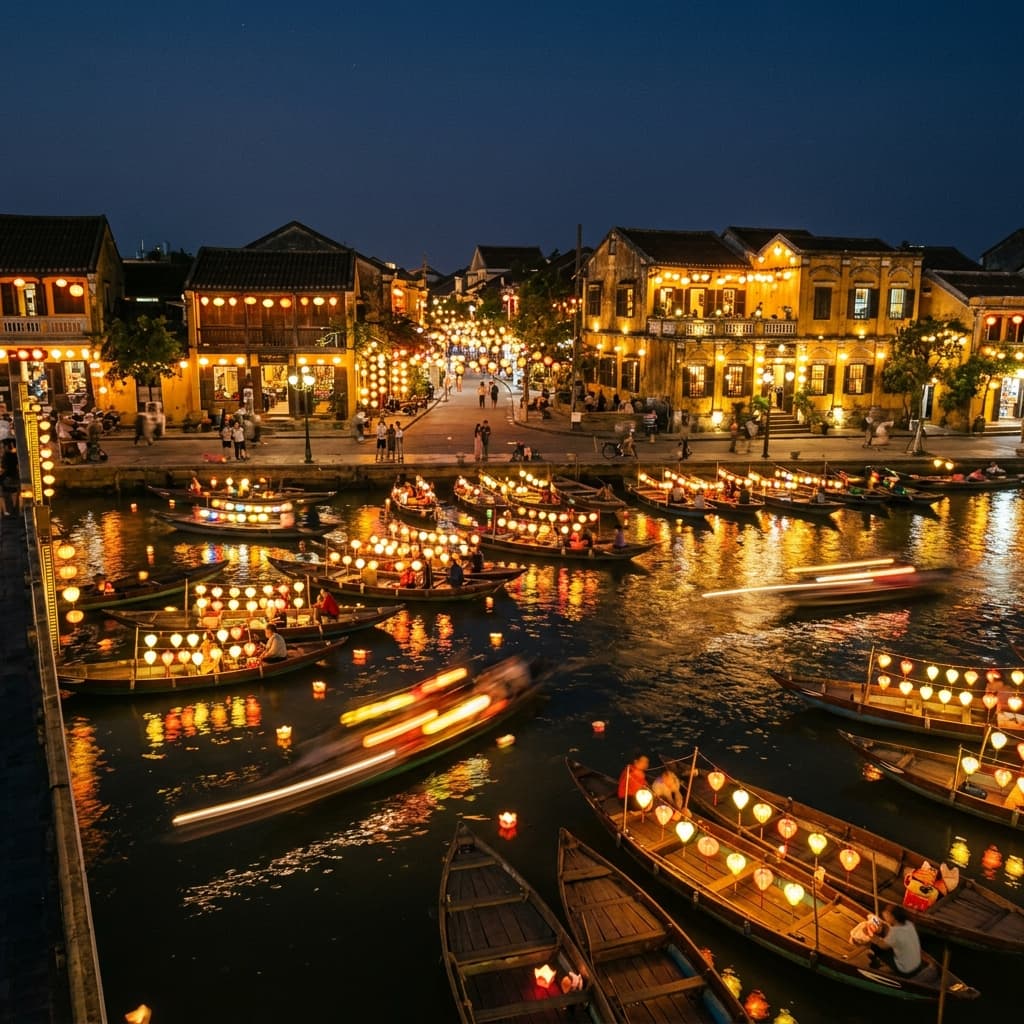
Hoi An's cuisine is its own thing, heavily influenced by the Japanese and Chinese merchants who traded here for centuries. Cao lau can only be made with water from the Ba Le well — the mineral content is specific and not replicated anywhere else. Carry only a rice flour noodle, pork, and crispy croutons (not crackers), it is one of the most distinct dishes in all of Vietnamese cooking. The city's cooking school scene is genuinely good: Blue Dragon on the river offers a half-day class that takes you to the market at 8am and sits you down for lunch at noon.
Chapter Four: Ho Chi Minh City — Abundance and Influence
Saigon eats differently: more sugar, more coconut, more Chinese influence from the Cho Lon district. The banh mi has reached peak evolution here — the baguettes are crispier, the filling combinations more elaborate. Com tam (broken rice with grilled pork chop, egg, and pickles) is the defining working-class dish. But the restaurant scene has also matured dramatically: Anan Saigon on Hoang Cong Chat reimagines Vietnamese street food for a global dining audience; Noir. Dining in the Dark is exactly what it sounds like and genuinely memorable.
Speak to a Vietnam specialist

Alice Mercer
Senior Vietnam Travel Specialist